The two terms get used as if they mean the same thing, and vendors rarely stop to explain them. Yet picking the wrong one leads to a part that is either weaker or more expensive than it needed to be. The core of the laser engraving vs laser marking difference is simple: one removes material to create depth, the other alters the surface to create contrast.
This article puts the two side by side, shows where each one wins, and gives you clear scenarios so you can decide quickly.
Laser engraving removes material from the surface, cutting into it to create depth, relief, and a feature you can feel. Laser marking changes the surface itself, darkening or etching it to create a permanent, high-contrast image without cutting deep.
Engraving is about depth. Marking is about information. Almost every other difference flows from that single distinction.
Factor | Laser marking | Laser engraving |
What it does | Alters the surface for contrast | Removes material for depth |
Depth | Very shallow or none | Noticeable, controlled depth |
Feel | Smooth to the touch | You can feel the design |
Best for | Codes, serials, logos, IDs | Deep logos, relief, artwork |
Durability | Permanent, resists wear | Permanent, deep and robust |
Speed | Faster | Slower, more passes |
Typical cost | Lower | Higher |
Common on | Metals, plastics, parts | Moulds, tools, components |
Read the table from top to bottom, and the pattern is clear. Marking is the light, fast, information-focused process. Engraving is the deeper, slower, design-focused one.
Laser marking uses a focused beam to react with the surface. Depending on settings and material, it can darken the surface, create a light etch, or produce a colour change, giving crisp, high contrast text and graphics.
Because it barely disturbs the material, marking is quick and clean, and it is ideal where the surface must stay smooth. It is the standard choice for serial numbers, batch codes, QR and data matrix codes, barcodes, small logos, and part identification across metals and plastics.
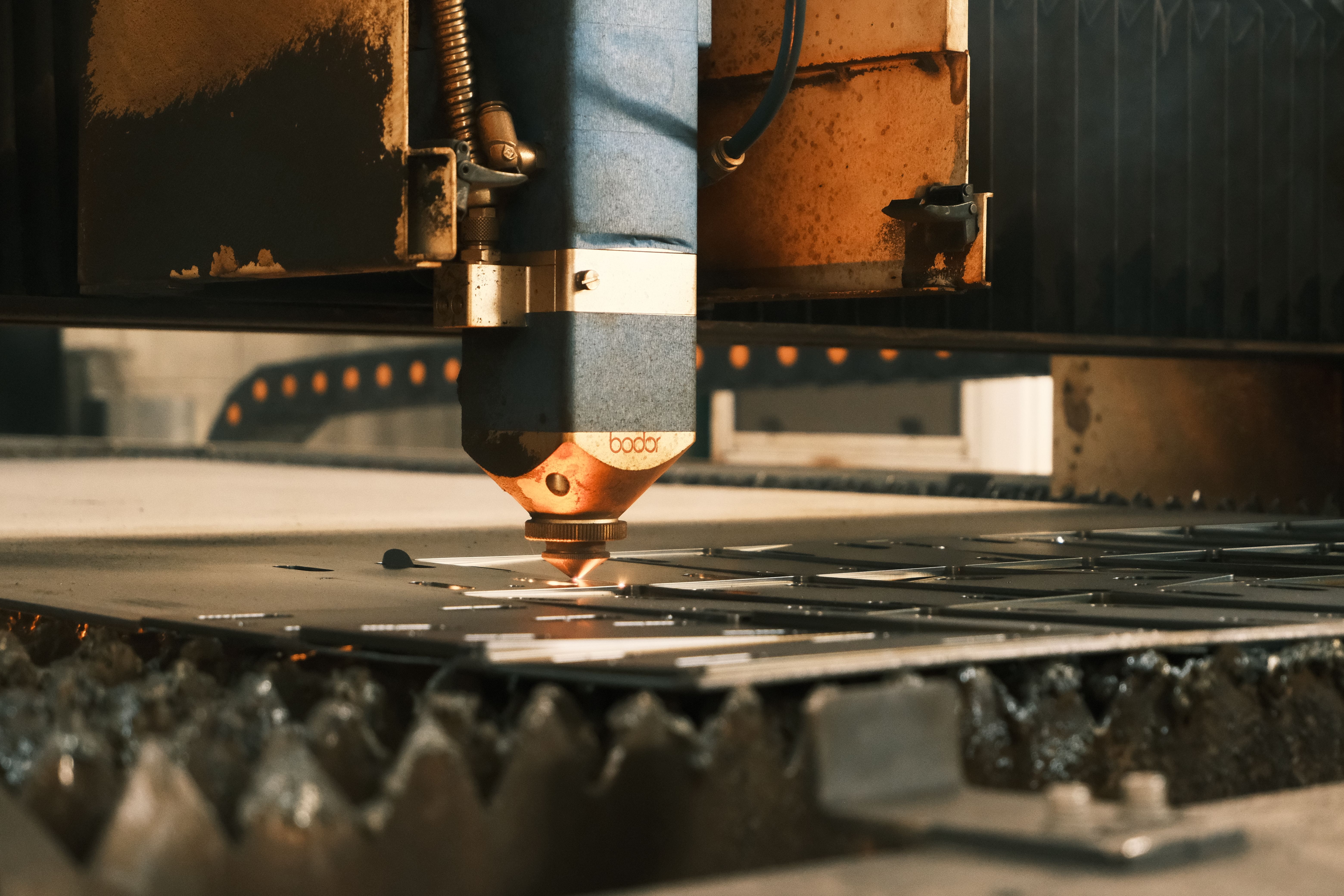
Laser engraving uses a stronger, focused beam to remove layers of material, building real depth into the surface. On more advanced work,3D laser engraving controls that depth layer by layer to create relief, raised-looking effects, and detailed artwork.
Engraving takes more passes and more time, which is why it costs more. In return, you get a design with depth and physical presence that stands up to heavy use, which is exactly what mould cavities, tools, and premium products often need.
A common myth is that engraving lasts and marking does not. Both are permanent. The difference is how they resist different stresses.
A quality laser mark is fused into the surface and survives handling, heat, and cleaning far better than any printed label. An engraving, because it is cut into the material, keeps its shape even under abrasion and wear. So for a code that must stay readable, marking is plenty. For a feature that faces constant rubbing or must transfer depth to a moulded part, engraving is the safer route.
Marking is faster and cheaper per part because it removes little or no material and needs fewer passes. That makes it the natural fit for high volumes of traceability marks. Engraving is slower and pricier because it removes material in controlled layers, but that cost buys depth and detail that marking cannot deliver. Neither is better in general. They are priced for different jobs.
Use these quick cases to place your own job.
You need serial numbers on a batch of steel fittings. Choose marking. It is fast, permanent, and reads clearly, with no need for depth.
You want a deep company logo in a mould cavity so every part shows a crisp raised emblem. Choose engraving. Depth and relief are the whole point.
You are adding QR codes to plastic housings for traceability. Choose marking. It gives a clean, scannable code without weakening the housing.
You want detailed 3D artwork or a relief pattern on a tool or premium product. Choose engraving, and on curved or deep areas, a shop with5 axis capability that can hold the correct angle.
Often, yes. A mould might carry an engraved logo for the finished product and a small marked code for tool identification. A good shop plans the sequence so the two do not interfere, and fits them correctly around any texturing or polishing the tool also needs. Keeping this under one roof avoids extra handling and keeps the surface consistent.
Whichever you need, share the same basics so the quote and result hold. Give the material, part photographs or a drawing, the design or code, the size and position, the required depth if you need engraving, the quantity, and the delivery date. If you are unsure which process fits, describe the goal and let an experienced shop recommend the right one instead of guessing.
Material changes how each process performs. On stainless steel and hardened tool steel, marking produces a dark, high-contrast result and engraving cuts clean, durable depth, which is why both are common on tools and dies. On aluminium and coated metals, marking gives sharp codes, while engraving is chosen when a part needs a logo you can feel. On engineering plastics, marking is the usual route for codes and branding because it keeps the surface intact, whereas deep engraving is reserved for tooling rather than the plastic part itself. A shop that works across these materials every day will set the right process and parameters instead of forcing one method onto everything.
People often assume engraving is simply the stronger or better version of marking, and that paying more always buys a better result. It does not work that way. The two are different tools for different goals. A crisp marked serial on a fitting is not improved by cutting it deeper, and a shallow mark cannot stand in for a relief logo that must transfer onto every moulded part. Better is whichever one matches the job, and the cheaper of the two is very often the correct choice.
The mistake to avoid is asking for the wrong process because the words sound alike. Paying for deep engraving when a fast surface mark would do wastes money. Asking for a light mark when the part needs depth leaves you with a feature that underperforms. Matching the process to the goal, permanent information versus physical depth, is the whole skill, and a shop that offers marking, engraving, and texturing can guide that choice honestly.
Jai Ambay Etching Process has provided precision laser marking, engraving, and texturing since 1996, more than 30 years from our Bawana, Delhi NCR facility, trusted by manufacturers supplying Maruti Suzuki, Samsung, Michelin, and Bata. Because we run laser marking, 3D engraving, 5 axis laser texturing, polishing, etching, and coating in one place, we can point you to the right process and deliver it under one roof.
Tell us your part and goal for a free quote within 24 hours. Call +91 98109 88206, message us on WhatsApp, or use thecontact page.
Engraving removes material to create depth and relief. Marking alters the surface to create permanent, high-contrast information without cutting deep.
Yes. A laser mark is fused into the surface and resists handling, heat, and cleaning far better than printed or ink labels.
Marking is usually cheaper and faster because it removes little material. Engraving costs more because it removes layers to build depth.
Both are permanent. Engraving, being cut into the material, holds up best under constant abrasion, while marking excels at durable surface codes.
Yes. Many tools carry an engraved logo and a marked code. A good shop sequences both so they do not interfere.
Marking. It creates clean, scannable QR and data matrix codes on metals and plastics without weakening the part.
©2026 Jai Ambay Etching Process. All Rights Reserved.